How to Care for a Damascus Steel Knife
Most Damascus knives are made from layers of high-carbon steel. That is why they take such a keen edge and why the pattern shows so clearly after etching. It is also why they need a little more care than a stainless kitchen knife: high-carbon steel rusts if it is left wet. The routine below takes a minute after each use and keeps the blade and its pattern looking right for years.
Why Damascus rusts
Stainless steel resists corrosion because it contains a lot of chromium. The carbon steels used in most Damascus (1095, 1084 or 1075, for example) contain very little. The nickel-rich layers, often 15N20, resist rust a little better, but the blade is only as resistant as its weakest layer. Moisture, sweat, salt, blood and acidic foods all start corrosion quickly.
After every use
- Wipe it clean straight away. Do not leave blood, sap or food on the blade.
- Wash by hand if needed with warm water and a drop of mild soap. Never put it in a dishwasher and never leave it soaking.
- Dry it completely, including the spot where the blade meets the guard, where water collects.
- Oil it. Wipe on a few drops of oil with a soft cloth, then wipe off the excess so only a thin film remains.
Which oil to use
- Food-safe mineral oil if the knife is used for food or game processing.
- Gun oil or light machine oil for knives used only outdoors or kept for display.
- Avoid vegetable and olive oil. They turn sticky and rancid on the steel.
Store it out of the sheath
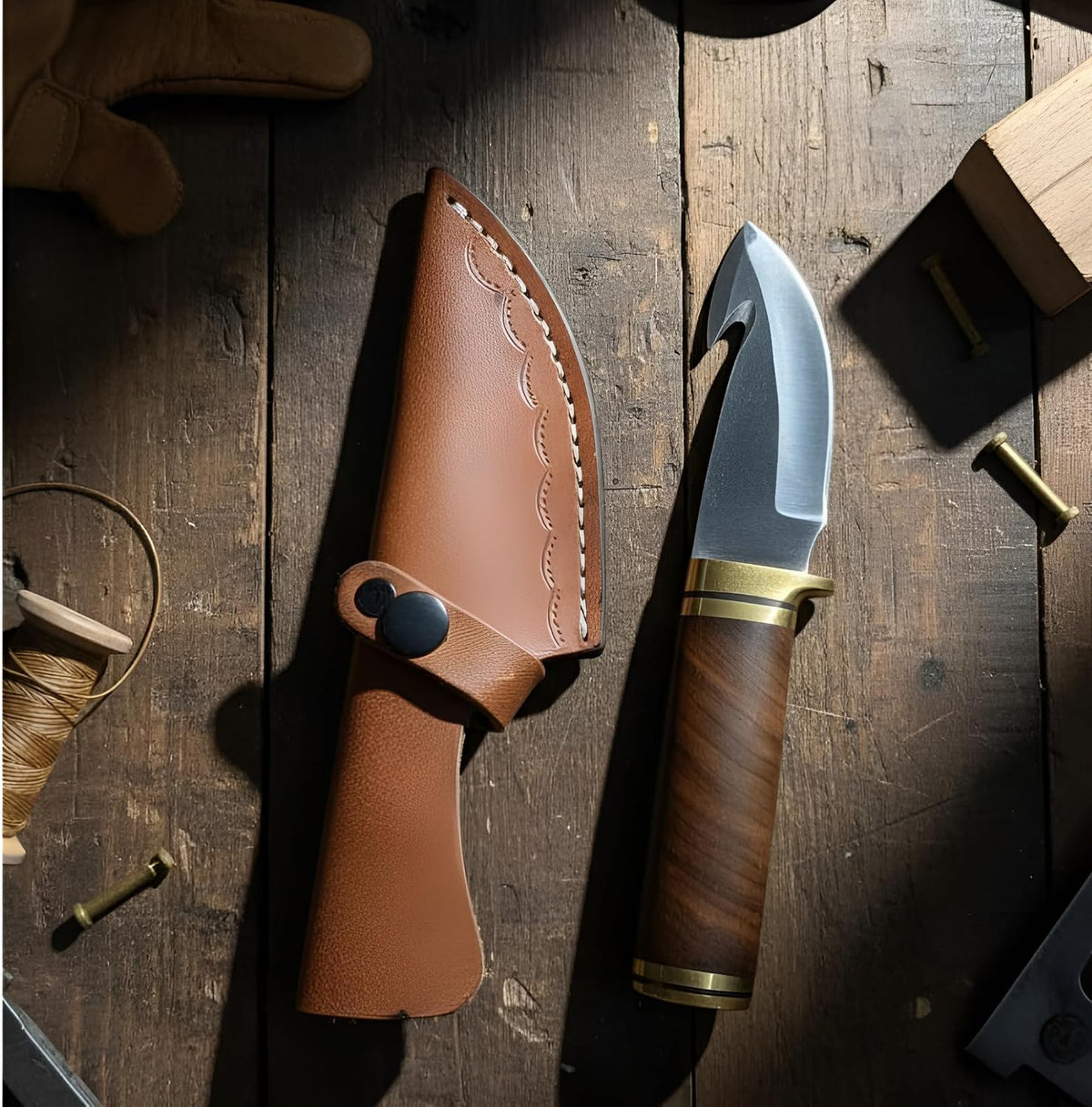
A leather sheath is for carrying, not storage. Leather absorbs moisture and holds it against the steel, and chemicals left from tanning can mark the blade. Between trips, keep the knife out of its sheath in a dry place: a drawer, a knife block or a display stand. In a humid climate, a silica gel pack in the drawer helps. Display pieces on a wall should be checked and re-oiled every few weeks.
Patina or rust?
With use, carbon steel develops a grey, blue or dark patina. It is a stable oxide layer, it is normal, and it actually helps protect the steel. Red or orange spots are rust, and they should be dealt with early.
Removing light rust
- Put a few drops of oil on the spot.
- Rub gently along the length of the blade with a soft cloth or very fine (0000) steel wool. Work with the grain, not in circles.
- Wipe clean, then oil the whole blade.
Polishing brightens the dark layers, so heavy rubbing will fade the contrast of the pattern. If the pattern has faded badly or the rust is deep, the blade can be cleaned and re-etched, but that is best left to someone experienced with acid etching.
Handle care
- Camel bone and bull bone: keep it out of water, direct sun and heat sources, which can dry the bone out and crack it. An occasional light wipe with mineral oil or a little paste wax keeps it from drying.
- Wood (ash, rosewood, olive): wipe clean and dry. If the wood looks dry or pale, rub in a little mineral oil or a wood finishing oil and wipe off the excess.
- Horn: treat it like bone. Avoid soaking and heat.
- Brass guards and pommels darken over time. Polish them with a brass polish if you like them bright, or leave the patina.
Leather sheath care
If the sheath gets wet, take the knife out and let the leather air-dry at room temperature, away from heaters and direct sun. Once or twice a year, rub in a leather conditioner to keep it supple and stop it cracking.
Keep the edge sharp
A dull blade slips and takes more force, which is when accidents happen. Our step-by-step whetstone sharpening guide covers Damascus blades too.
Quick checklist
- Wipe, wash by hand, dry completely.
- Thin coat of oil after every use and before storage.
- Store out of the leather sheath, somewhere dry.
- Deal with red spots early; grey patina is fine.
- Keep bone and wood away from water and heat.
New to Damascus? Read what Damascus steel is and how it is made, or browse the Damascus collection.